Our views on GM Crops
Gene Campaign has not taken a ‘for’ or ‘against’ position in the highly polarized debate on GM crops. It demands stringent biosafety transparency and democratic decision making in this crucial field that has significant implications for food, livelihoods and environmental security. It seeks accountability and greater competence in the regulatory systems. Gene Campaign’s writ petition of 2004 requested the Supreme Court that unless the regulatory system is made demonstrably more competent, transparent and responsive to public concerns, there should be a moratorium on commercial release of GM crops. Gene Campaign took legal action in October 2007 by filling an application in the Supreme Court to stop the government from deregulating the import of GM foods and lifting regulatory oversight from this sector.
The way forward
Gene Campaign’s agenda is especially relevant today when food prices are going through the roof and the annadata who feeds the nation is not able to feed his own family. Malnutrition is acute and rampant. 50% of children are underweight, 98% of adolescent girls and 96% of pregnant women are anaemic, according to government data. Losses on the farm are leading to extreme rural poverty.
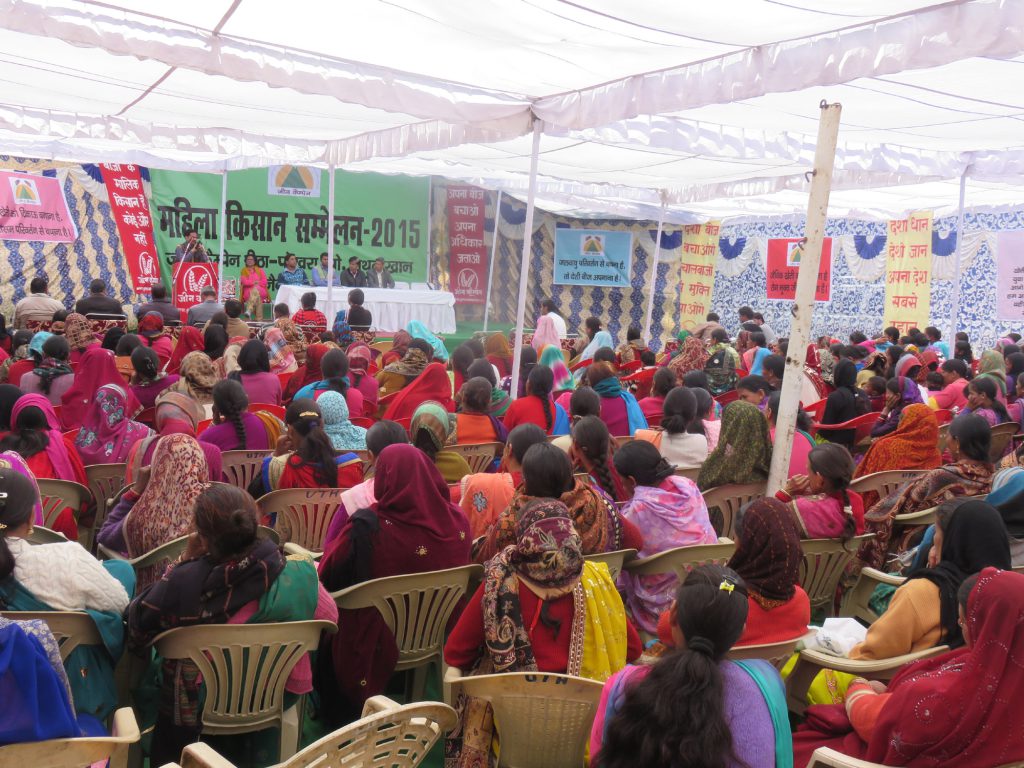
To address these concerns, Gene Campaign organized a brainstorming session on its 20th anniversary to launch a campaign on making farming profitable and farmers prosperous. A charter of demands was formulated and presented to the media. The demands include among others, increased annual budgetary outlays for agriculture by the Union and State governments to 10 per cent of India’s gross domestic production for the next ten years. We also want the programs for food security to include nutrition security and provide support to children for registering in schools and receiving regular health checkups. It is important that credit and insurance facilities are provided to all those who cultivate land and keep livestock by revamping the kisan credit card and making insurance more widespread. Given the growing feminization of agriculture in India, there an urgent need to enforce joint ownership of productive assets and invest in agriculture equipment suitable for women. Agricultural extension services must be restored to promote diversified and ecologically sustainable agriculture backed by research support and indigenous knowledge. A comprehensive soil testing program must be launched across India to implement location specific measures to restore and across India to implement location specific measures to restore and improve soil health. We need a policy and research framework for the development of agriculture in the mountainous regions of India. The Public Distribution System (PDS) must be decentralised and include a range of locally produced foods. Reliance on chemical inputs in agriculture should be reduced and bio-organic farming systems should be encouraged.
A water literacy campaign should be launched at policy and implementation levels as water management is the entry point to improve livelihood. All government policies must be geared towards enabling the Indian famer to be entrepreneur. Only then can those who are in the riskiest profession in the world be empowered, making farming profitable and farmers prosperous.